



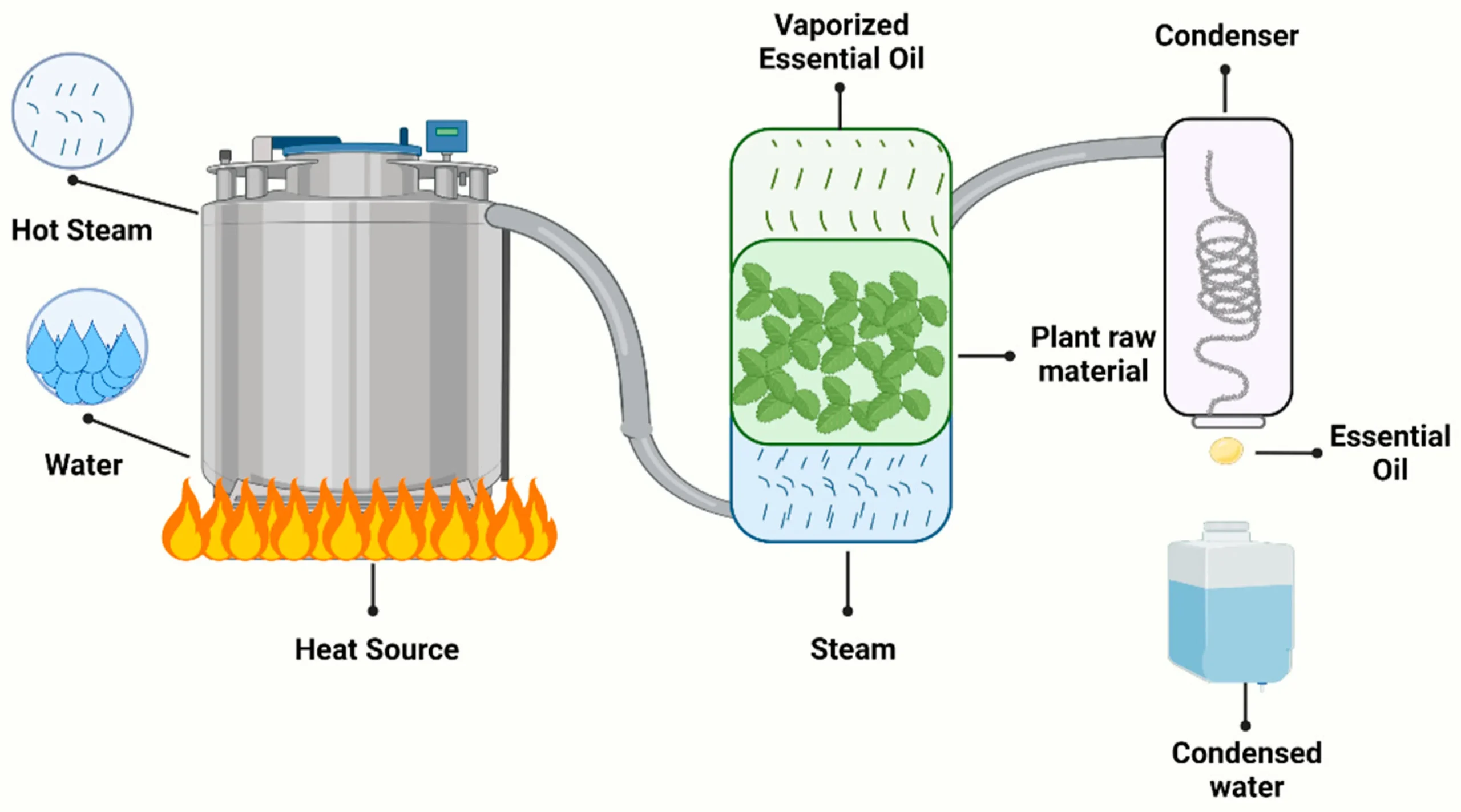
Every scent we perceive from an essential oil is, in fact, a unique “chemical fingerprint” – made up of dozens, sometimes hundreds, of natural compounds working together to create that distinctive aroma.
The Core Compound Families
Most essential oils are composed of a mix of the following:
- Terpenes: The most common group, responsible for the “green” and “citrus-like” notes found in many plants.
- Phenols: Give certain oils a strong, concentrated character, often associated with plants known for “spicy” or “sharp” scents.
- Esters: Responsible for the “fruity” or pleasantly “sweet” notes.
- Aldehydes and Ketones: Add deeper, more complex layers to the final scent.
Why “Concentration” Matters as Much as “Type”
The presence of a certain compound in a plant isn’t enough on its own – the ratio and concentration are what determine the strength of effect and the final scent. The same compound, at a different concentration, can produce an entirely different aroma or effect.
This is exactly why any serious extract relies on precise laboratory analysis (such as Gas Chromatography–Mass Spectrometry, GC-MS) to determine the actual ratios of each compound, rather than relying solely on the plant’s name as a guarantee of quality.
The Scientific Name: More Than Just a Label
The same plant may be known by different common names depending on the region, but the scientific (binomial) name is the fixed reference that ensures everyone is actually referring to the same botanical species, with the same expected chemical properties.
Conclusion
Understanding the chemical composition of an extract isn’t a scientific luxury – it’s the foundation on which any reliable judgment of product quality and efficacy is built.